Weaving PRACTICE
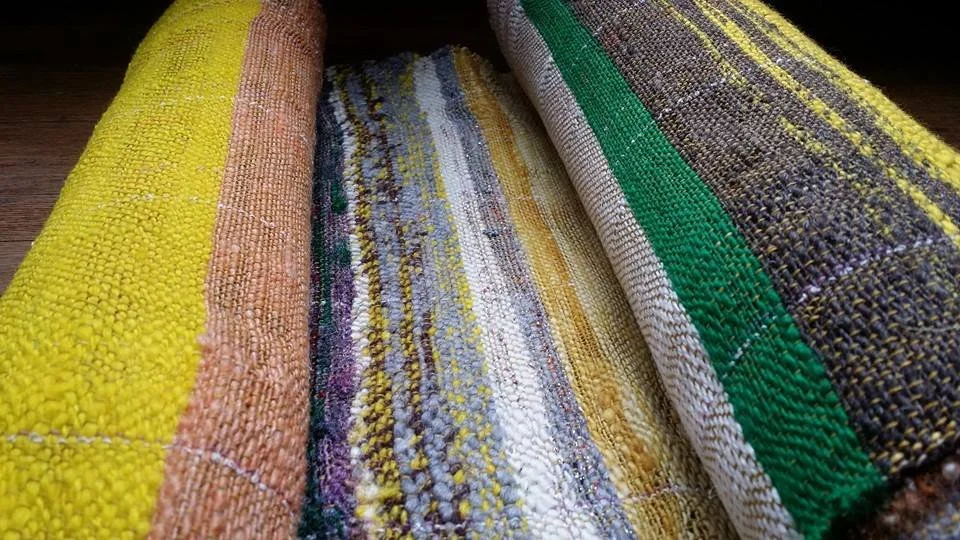
Weaving is practiced across species—spiders, birds, beavers, and humans—each working within material limits and structural constraints. In my work, weaving proceeds through preparation, sequencing, and tension. The labor that precedes the visible surface—warping, counting, setting structure—remains embedded in the finished cloth.

The practice requires adherence to rule: the tension of warp, the behavior of fiber, the limits of structure. Working within these conditions shifts attention away from intention and toward process. The cloth develops through constraint, where small deviations register as density, drift, and irregularity.

I work with materials such as wool, nettle, cotton, and wood-derived fibers, extending their use through spinning, dyeing, and weaving. These processes carry forward prior states of the material rather than replacing them. Techniques are inherited, repeated, and altered through use, producing variation across time rather than fixed forms.

Weaving functions as a sustained procedure. Repetition produces duration, and duration alters perception. Over time, the work reduces the emphasis on individual authorship and foregrounds the conditions that make the structure possible. What emerges is not a singular object, but a record of process held in tension—one that continues to shift through use and time.