Drawing, Paper, and Material Inquiry
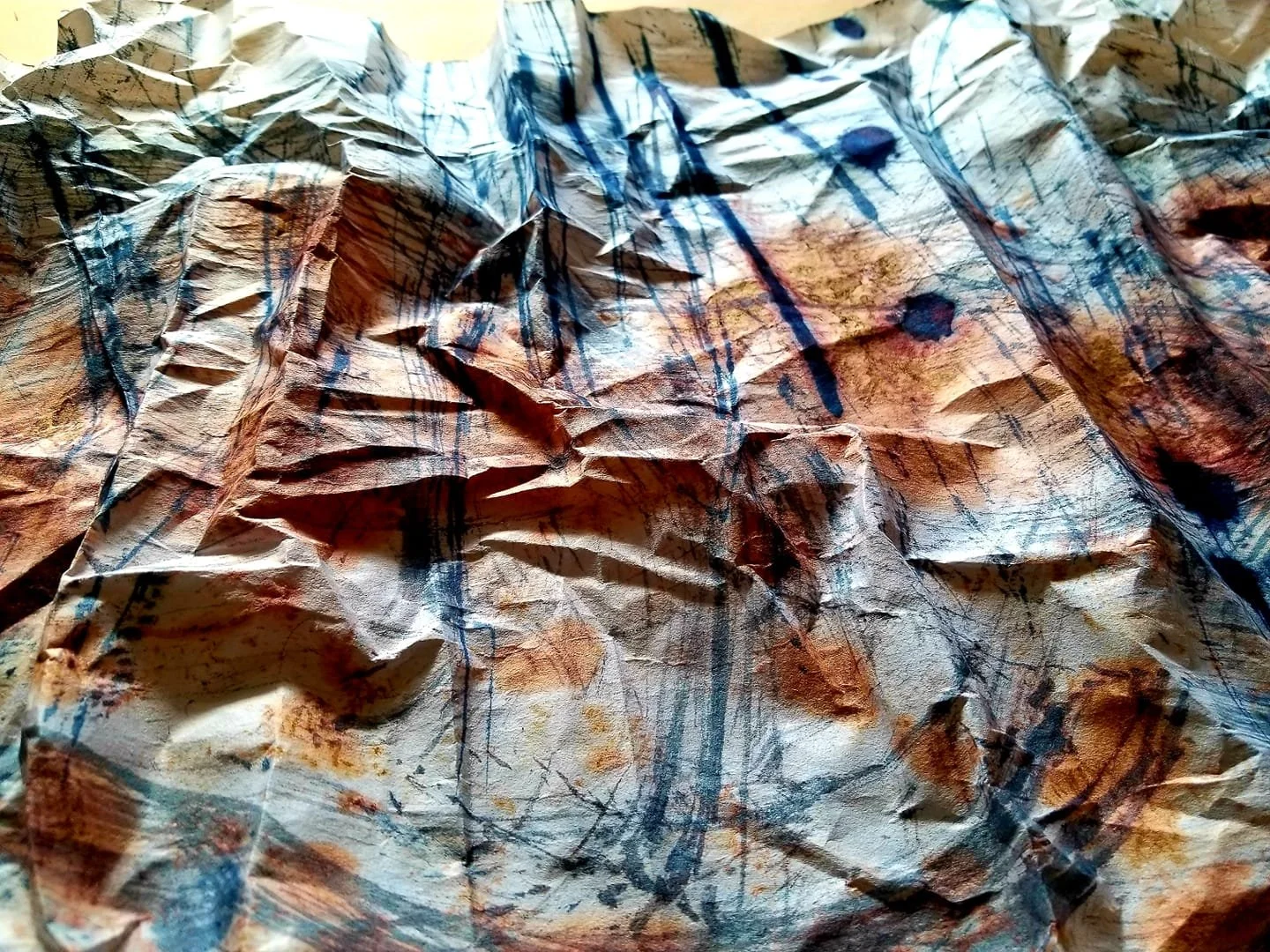
Drawing functions as an initial site of inquiry in my practice. It proceeds through mark, erasure, and revision, allowing form to develop through repeated adjustment rather than resolution. Drawing operates as an open system in which gesture, correction, and variation remain visible over time.

Papermaking extends this process materially. I produce sheets by hand from kozo, cotton, and flax, often integrating locally gathered plant matter. Fibers are beaten, suspended, and formed into paper, creating surfaces that retain the conditions of their making. These substrates are not neutral; they register pressure, water, and fiber distribution, shaping how marks are received and held.

The act of beating pulp is rhythmic and sustained. Through repetition, raw plant material is broken down and reconstituted as surface. This process carries prior states of the material forward, allowing the paper to function as an active component in the work rather than a passive ground.

Drawing and papermaking operate as interdependent procedures. The paper conditions the mark through resistance and absorption, while the mark reveals the structure of the paper. Variation emerges through this exchange, where neither material nor gesture is fully controlled. Procedures may involve repeated layering of marks across the same surface, allowing variations in absorption and resistance to accumulate over time.

Within this system, drawing becomes a method of attending to material relations. It tracks how gesture interacts with surface, and how surface alters gesture in return. What results is not a fixed image, but a sequence of marks shaped by the conditions of their production and the materials that sustain them.