BIO
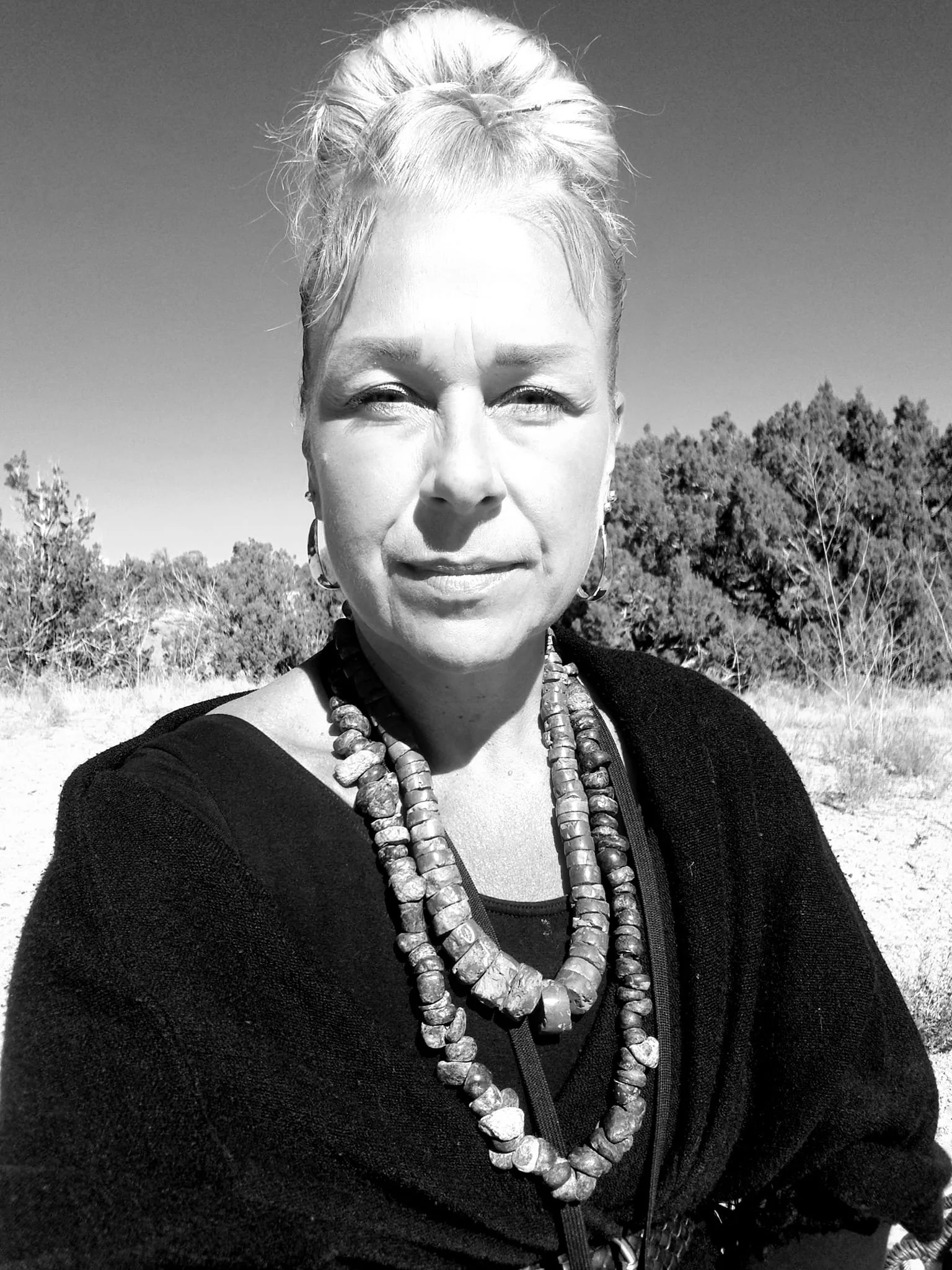
Monika Neuland (Czech-American, b. 1971) is an interdisciplinary artist working across fiber, paper, drawing, painting, sound, and social practice. Her work develops through material systems structured by repetition, sequence, and material conditions, with form emerging through variation over time as shifts in tension, density, interval, and accumulation across materials.

Speculative Ecologies is an ongoing framework that brings together her studio and social practices through shared procedures. Across fiber, paper, drawing, and sound, the work tracks how forms are carried, altered, and recombined across materials, environments, and cultural contexts. Materials function as active systems, registering pressure, accumulation, and duration within compound environments where human and more-than-human processes remain in relation.

Rooted in heritage practices, she uses techniques such as weaving, papermaking, calligraphy, painting, and poetic forms as active systems through which cultural knowledge is repeated and transformed. These practices are held within a shared space of attention, repetition, and transmission.

Born into a Czech-German immigrant family and raised in the multilingual and culturally diverse Humboldt Park neighborhood of Chicago, Neuland’s experience of linguistic and cultural polyphony informs her work, where language, material, and structure operate in parallel across contexts.

In parallel with her studio practice, she develops collaborative projects through shared making, material reuse, and structured participation. Working with repurposed and surplus materials, she builds studio environments that function as material commons and working archives.

She has worked across the United States, Turkey, Ethiopia, Germany, and Guatemala, and has developed more than forty community-based studios in both urban and rural contexts, including long-term work within neurologically diverse and cross-ability environments.

Her work includes coordinating large-scale cultural events with New Mexico Historic Sites and developing heritage-based programs and festivals with the Northern Rio Grande National Heritage Area, extending her practice into regional cultural systems. She has also contributed to creative reuse infrastructure in Chicago, including the Chicago Creative Reuse Exchange and the Creative Reuse Warehouse in Englewood with Envision Unlimited.

Across her work, making functions as a system of transmission, carrying material, cultural, and social knowledge forward through repetition, variation, and use.


