Social PRACTICE
Social Fiber Projects operates through environments where making, gathering, learning, and public expression intersect. Studio practice and public-facing work form a continuous field of exchange and shared authorship.

At its core is a belief that creativity, beauty, and participation in cultural life are public goods rather than private luxuries. Over three decades of practice, I have learned that people, materials, and environments are often more capable than we initially imagine. Given meaningful choices, access to materials, and environments built on trust, attention, and possibility, people routinely exceed expectations—both those imposed by others and those they hold about themselves. Creativity is less a specialized talent than a human capacity that grows when people are given opportunities to make, experiment, and contribute. Materials and environments become teachers in this process. Communities emerge not through agreement alone, but through shared work, responsibility, reciprocity, and sustained acts of making.

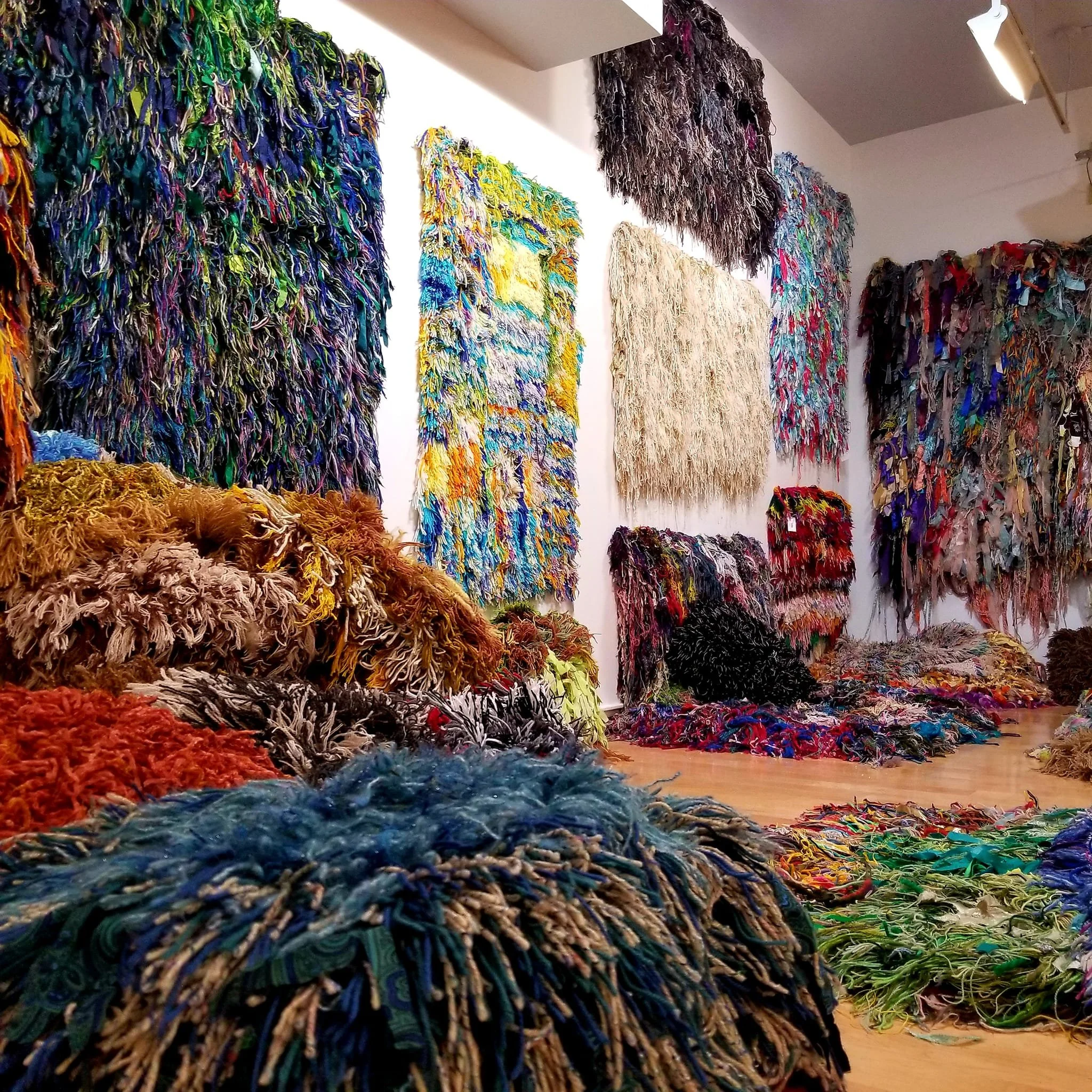
I develop collaborative studios and community-based projects using repurposed, surplus, and discarded materials. The waste stream functions as both a material commons and a working archive. Materials are approached as shared resources that carry histories of use, responsibility, and possibility. They are sorted, redistributed, and transformed through shared processes that invite collaborators to reconsider value, stewardship, imagination, and use.

Released from conventional systems of value, reclaimed materials become available for experimentation, reinvention, and collective authorship, often mirroring the ways people themselves are brought into new forms of relation through the creative process.

The work also learns from long-standing cultural traditions in which making, gathering, food preparation, stewardship, repair, and celebration function as forms of knowledge transmission. These practices are approached not simply as cultural content, but as living systems of observation, relationship, and collective memory.

Many of these studios function as creative sanctuaries—spaces where experimentation is encouraged, failure carries little penalty, and collaborators can work at the pace required by genuine attention. Working for many years within disability arts and cross-ability communities profoundly shaped my understanding of creativity. These environments demonstrated that innovation often emerges not from efficiency, standardization, or mastery, but from alternative approaches to perception, communication, problem-solving, and making.

My role is not simply to facilitate participation or teach techniques, but to design conditions through which relationships, skills, forms, and unexpected possibilities can emerge. Art occupies a particular place within these environments because it creates space for imagination, symbolic transformation, and forms of relation that are difficult to access through purely functional systems. While the work intersects with education, community development, ecological stewardship, and social services, its purpose is not primarily instrumental. Art makes room for ambiguity, play, delight, invention, and the possibility that people, materials, and situations may become otherwise.

Making externalizes thought and creates visible evidence of experimentation, effort, and growth. Working directly with materials cultivates attention and develops a capacity to remain in relationship with uncertainty. As materials resist and plans change, confidence develops not because difficulty disappears, but because one's ability to move within it increases.

This practice operates within a broader tradition of cultural democracy associated with settlement-house movements such as Hull House in Chicago, where access to beauty, learning, and creative expression was understood as a public good rather than a private privilege. I have come to understand beauty less as an aesthetic category than as a form of attention. Beauty emerges when care, effort, imagination, and relationship are invested in people, materials, and places. The opportunity to participate in making beauty is itself a cultural right.

Over the past thirty years, I have developed more than forty community-based studios in rural and urban contexts. This work contributed to the Chicago Creative Reuse Exchange and the Creative Reuse Warehouse in Englewood, and more recently has expanded into heritage and cultural landscape initiatives through collaborations with New Mexico Historic Sites and the Northern Rio Grande National Heritage Area.

Social Fiber Projects connects work across the United States, Turkey, Ethiopia, Germany, and Guatemala. Across these varied contexts, the goal is not the production of a singular artwork but the cultivation of conditions in which people, materials, and environments are brought into meaningful relation.

What remains after a project concludes is rarely a single object. More often it is expanded capacity: greater confidence in problem-solving, increased willingness to take risks, stronger collaborative skills, deeper tolerance for uncertainty, and a greater sense of agency. Relationships persist. Material knowledge circulates. Reuse systems remain active. New forms of cultural continuity emerge. These forms of capacity, connection, and continuity are artistic outcomes in their own right.